
Separating Creators from their Works: The Distance Between the Maker and the Experience
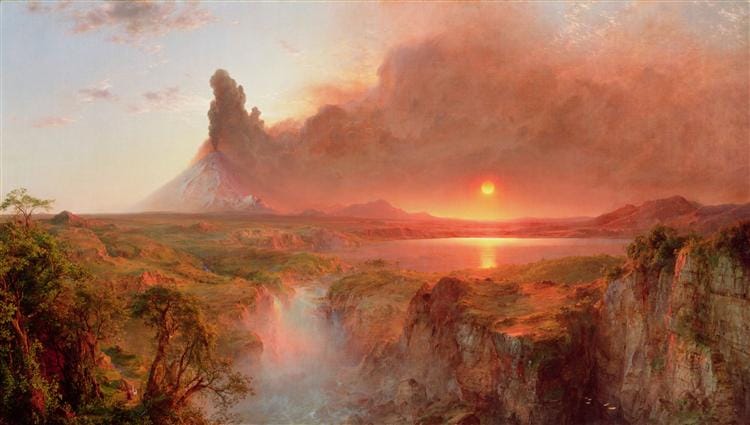
If you've been interested in the world of art and how this magical practice comes to be, you will most likely have heard some version of this before: The artist is but a conduit between concepts that are outside of our basic capacities of understanding, or what some of us call the divine, and the recipient, which would be in that case the enjoyer of the art. In his book "The Birth of Tragedy," Nietzsche refers to the Will, one of his favourite concepts (borrowed from Schopenhauer), as the force that possesses the artists to create. Ironically, as Nietzsche tries to cover in some way the nature of art and how it can come to control an artist, he gets lost in his own incredible capacity to write poetically confusing rants on vague topics. Therefore, the readers, or at least most of its readers, who aren't pretentious enough to act like they did grasp everything they read, find themselves left without a clear description of the artistic phenomenon but are at least provided with an obvious example of its compelling effects. This mystical force that holds the treasures of inspiration does not seem to distribute her wealth equally. In fact, she has her favorites, giving everything to some and leaving the rest with almost nothing.
But our lack of understanding of this mysterious force leads many of us to hold inaccurate views of works of art and their makers; one could even say ungrateful perspectives.
First and foremost, one must consider that the very thing that compels so many people who don't know anything about painting to criticize Picasso's work is that most of us treat art as a shared resource. This is true in some way, as this source of deeper inspiration is connected to everyone and is owned by no one, though some of us seem to have greater access to it than others. As a result, when one of us gets this VIP pass to assess all this depth of experience, this profound connection to other facets of reality that are less explored, we sometimes jealously ask them to be better, to conduct themselves in a more acceptable manner, to keep their work as pure as possible, not to shift too much away from the thread of reality they had exposed to us, which we cherished so much, by fear of seeing it disappear. But if this source of inspiration is not theirs, we must remember that it is certainly not ours either. This source of inspiration is part of everything and will always be present. Some of us get the VIP card, and it has nothing to do with being a better person. If you are interested in honouring the output that is created in the artistic process, then you should enjoy it as it is, with no ties to the maker. One can enjoy Jim Morrison's bold mixology of American rock n roll and jazz or Picasso's capacity to produce some of the most beautiful realistic art you can imagine and his bold decision to contribute to developing one of the most peculiar styles of painting that had ever existed, and still not agree with their moral characters. The point I am trying to get at is not to express my interest in stopping others from expressing their moral discontent with some of the public figures that have left a legacy in the collective artistic culture but to learn to separate them by respect for the true source of the artistic input that was presented to the world: the source of all inspiration, something greater than all of us, which transcends humans obsession with their sometimes blurry sense of right and wrong.
Now that we have addressed the 5000-foot distance between artists and their work, one must study the relationship between the conduit and the work and how the shape of the soul of the artist affects the output. What I mean by this is that every work of art, although one could say comes from the same divine source of inspiration, is captured and moulded by the mind of the artist who observed this piece of inspiration and sought to express it into a work of art that could inspire others. Helping them see the glimpse of inspiration that the artist caught. In fact, the psychic lens of the artist is what gives each creation its aesthetic. It is what makes it unique and infinitely rare. Sometimes, as consumers of art, we let ourselves be tricked by the belief that the work of art observed could have been better if only one little thing was different if the artist had made it more complete by adding some other element. Although artists can learn from others and seek to improve their works, the act of criticizing a work of art that was already brought to this world becomes trivial because it wasn't made in a factory by a company consulting its clients to make it feel exactly the way they wanted it to be. No. It was a person with childhood memories who might have been inspired to paint on a spring morning while having their morning coffee and decided to walk into their workshop, pick up the first paint brush they could find, and start to paint right away so that in the end the pattern of the brushwork was never engineered to be a certain way; they just happened to be the result of a human deciding to get some work done. Once again, this is not to say that art should never be critiqued; it is always enjoyable to share one's opinion with a friend on a piece of art, and you should not be shy about saying you don't like something. What I think is important to study is the art (pun intended) of seeing art for what it is: a work that can be separated completely from its maker, and yet never forgetting that it was not engineered to fit in a specific frame and should never be.
The paradox in the distance between artist and creation is not problematic, for the lens through which one can view art with an open mind and enjoy its treasure more deeply is by acknowledging the travel of an idea. How it starts in the universe and somehow finds the attention of an artistic soul that will process it into an expression that will, in turn, be processed by you. The margin for the utility of criticism, therefore, seems to be disappearing, though the potential of marvelling at this miracle keeps growing.
The line between sharing one's opinion, critiquing and criticism is sometimes very thin. What one should be careful of is the act of criticism, the act of sharing one's disapproval of a piece of work. Indeed, choosing to acknowledge how works of art come to be in a more careful manner should make the consumer of art lean away from this practice. This is important not because artists are too fragile to receive criticism, but because the act of doing so is simply dissociating one's understanding from the reality of artistic work and makes one's potential to truly enjoy art so much lesser than it could be.
Being mindful of how we perceive art and come to enjoy it is in itself… well, an art. Letting the distance between the maker and the work of art be is what, in turn, gives us space to better process inspiring expressions and to enjoy art as it should be.
Cheers,
E.F.
P.S. I'll always try to leave my readers by sharing something that inspired me.
Frederic Edwin Church is an amazingly talented painter from the 19th century who was dedicated to painting unbelievably stunning skies and landscapes. See his painting called Cotopaxi (Ecuador) on top of the essay.